Your first wedding dress appointment is about discovering how different gowns look, feel and fit your body. What you wear underneath can influence that experience more than you expect.
The good news? You don't need expensive lingerie, a new outfit or special bridal accessories.
After nearly 30 years as a bridal designer, couture dressmaker, and stylist, I've learnt that understanding how a dress works matters far more than arriving looking like a bride.The right clothing lets you focus on what matters: the wedding dress.
Does It Matter What I Wear to My Bridal Appointment?
Yes, but not because you need to look a certain way.
Wedding dresses differ from everyday clothing. Some have structured bodices, internal corsetry and fitted waistlines. Others use lightweight fabrics that follow the body's natural shape.
What sits beneath these gowns can affect how they look.
A thick waistband may create a visible line. A padded bra can change how a bodice sits. Underwear seams may show through delicate fabrics.
None of these things automatically makes a dress unsuitable.
As a couturier, I learnt how small adjustments can transform a garment. A waist positioned slightly differently or a bodice balanced correctly can change the entire impression.
Your underwear is part of that picture, but it shouldn't distract you from understanding the dress itself.
Why Comfortable Clothing Makes Trying on Dresses Easier
A bridal appointment usually involves several changes.
Some gowns have complicated fastenings, fitted bodices, or full skirts that require assistance.
Simple clothing makes the experience easier.
Leggings, a camisole, a loose dress or a T-shirt are suitable. Wrap dresses are practical because they're easy to remove without pulling anything over your head.
Complicated layers and numerous fastenings make changing more time-consuming.
I've always believed bridal appointments should focus on finding what suits the bride, not on unnecessary preparation.
Your everyday outfit does not affect the wedding dress you choose.
What Underwear Should I Wear to Try on Wedding Dresses?
Underwear matters because it sits directly beneath the gown.
Smooth, comfortable, well-fitting underwear usually provides the clearest starting point.
Seamless briefs reduce visible lines beneath fitted dresses. Skin-tone underwear that matches your complexion is often less noticeable beneath pale fabrics than white underwear.
White underwear isn't automatically invisible beneath a white wedding dress. Depending on the fabric, it can create more contrast.
The cut matters too.
High-waisted underwear may work under one silhouette but show through another.
A structured ball gown usually conceals underwear lines more effectively than a closely fitted crepe dress.
Having worked with different fabrics and constructions throughout my career, I know that two gowns can respond very differently to the same underwear.
What appears noticeable under one dress may disappear completely under another.
Your appointment underwear is simply a starting point, not necessarily your final wedding-day choice.
Do I Need to Wear a Bra to My Wedding Dress Appointment?
Many wedding dresses contain internal support that everyday clothing doesn't provide.
Depending on the design, a gown may include boning, built-in cups or a structured bodice.
Some are intended to be worn without a conventional bra. Others may benefit from additional support.
A strapless or multiway bra can be useful, but it isn't essential.
Visible straps, high back bands or padded cups can interfere with certain designs.
A low-backed gown, for example, may not accommodate a standard bra.
One thing my years as a dressmaker taught me is that support should come from understanding the garment's construction, not from automatically adding more underneath.
A properly constructed bodice can provide remarkable support, but the result depends on the individual gown and its fit.
Remember, a sample dress may not fit correctly. Its support can feel different from a gown ordered and altered for your body.
Should I Wear Shapewear When Trying on Wedding Dresses?
Shapewear is entirely optional.
Some brides enjoy its smoothing effect. Others find compression uncomfortable.
Neither approach is right or wrong.
Shapewear can change how a fitted gown sits. It may smooth some areas while creating visible edges elsewhere.
A structured wedding dress may already provide shaping and support. Extra shapewear could add unnecessary bulk.
A softer gown may behave differently.
I've always approached fitting with one principle: the dress should adapt to the woman, not the woman forced into the dress.
Shapewear shouldn't compensate for poor fit.
The best fit lets you feel supported without constantly thinking about what you wear.
What Shoes Should I Wear to My Wedding Dress Appointment?
You don't need your actual wedding shoes.
Comfortable footwear is perfectly suitable for a first appointment.
Heel height can affect a gown's proportions.
It changes your posture, how the skirt hangs and where the hem meets the floor.
As a dressmaker, I've seen how adjusting a hem to the right length can transform the balance of an entire gown.
A dress that initially looks awkward because it's too long may appear completely different at the correct length.
Many boutiques provide fitting shoes or platforms to help demonstrate this.
Your final shoes become particularly important during alterations, when the hem is adjusted.
At your first appointment, footwear helps you visualise the silhouette. It does not determine if the dress suits you.
Want to feel fully prepared for what to wear to your wedding dress appointment?The 23-page printable guidebook brings together what to wear, what to bring and what to ask.
View the guidebook on here →
How Much Make-up Should I Wear When Trying on Wedding Dresses?
Make-up is a personal choice, but protecting the gowns matters.
Wedding dresses often contain pale, delicate fabrics that mark easily.
Foundation, lipstick, and bronzer can transfer onto necklines, straps, and bodices, especially when dresses go over the head.
Fresh fake tan, tinted body lotions and oily skincare products may also mark fabrics.
You don't need to arrive without make-up.
You don't need a full bridal beauty look to appreciate a wedding dress.
The gown's shape, fabric and construction matter more than whether you've recreated your wedding-day styling.
What About My Hair?
Your hairstyle can change how you see a wedding dress.
A detailed neckline, delicate straps or an elaborate back may look different when your hair is up rather than down.
An off-the-shoulder gown may appear more defined when the neck and shoulders are visible.
These are styling considerations, not rules.
Throughout my career, I've approached bridal styling as a complete composition. Hair, accessories and the dress eventually need to work together.
But during your first appointment, the gown remains the foundation.
You don't need a professional hairstyle to understand whether its design suits you.
Why Might My Wedding Dress Sample Look Different?
A common misconception about bridal appointments is that every dress should fit perfectly.
It won't.
Boutiques usually carry sample gowns in selected sizes.
A sample may be too large in the bust, tight at the hips, or considerably longer than needed.
Consultants often use clips to demonstrate the intended silhouette.
Clipping the dress does not reproduce the exact fit of a correctly sized and altered gown.
Your underwear can also influence what you see.
A bra may become visible if the sample doesn't close properly. A waistband may create a line if the fabric is pulled in the wrong way.
My experience in couture taught me that small fitting adjustments can completely change how a garment sits.
A sample shows you the design's potential, not necessarily its finished fit.
Why Looking Beautiful and Feeling Comfortable Are Different
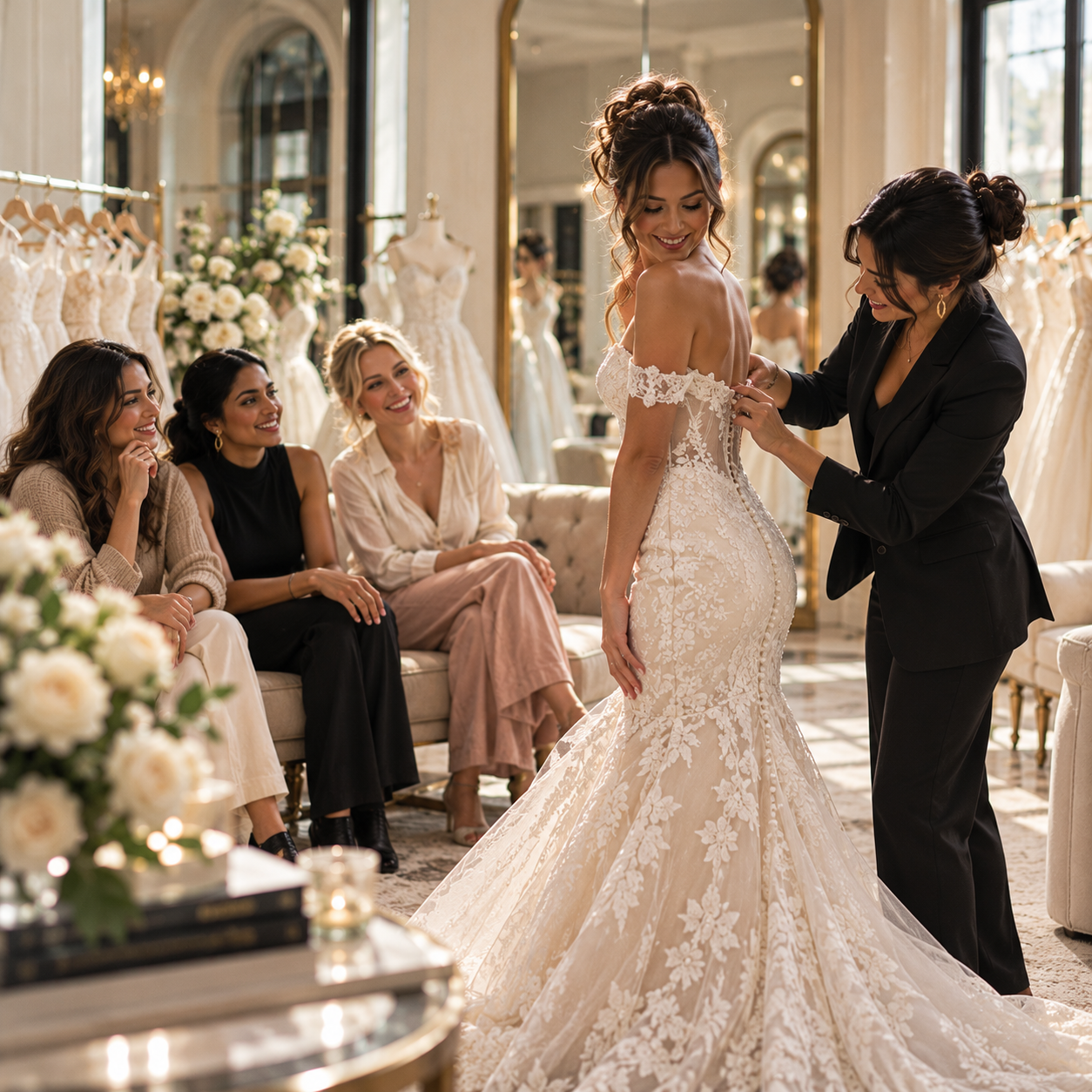
A wedding dress can look spectacular and still feel uncomfortable.
Some gowns have heavy construction, multiple layers or restrictive skirts.
A mermaid gown may create a dramatic silhouette but offer less freedom around the legs. A ball gown may feel surprisingly heavy.
A lightweight dress may feel effortless but offer less internal support.
Neither is automatically better.
Over the years, I've learnt that two dresses can fit correctly but feel completely different.
One bride may love a closely sculpted silhouette. Another may prefer a softer, more natural fit.
The key difference is between a dress that looks beautiful and one that lets you feel beautiful while wearing it.
You're choosing a dress to move in, celebrate in and enjoy — not simply admire in a mirror.
What I Want Every Bride to Know Before Her First Appointment
You don't need expensive underwear, professional make-up or a full wedding-day look.
You don't need to change your body to deserve a beautiful wedding dress.
My years as a designer and dressmaker taught me that successful fitting isn't about forcing a woman into a standard shape.
It's about understanding her proportions, preferences and comfort, then finding or creating a garment that works with her.
The best fit doesn't constantly demand your attention.
It allows you to forget about the dress and enjoy wearing it.
That's what matters.
PREPARE WITH CONFIDENCE
Plan What to Wear to Your Wedding Dress Appointment With Confidence

Prepare for Your First Wedding Dress Appointment
Not sure what to expect, wear, bring or ask? This 23-page printable guide helps you:
✔️Know what to expect at your appointment.
✔️Avoid unexpected costs and hidden fees.
✔️Choose what to wear and bring.
✔️Choose supportive guests and avoid pressure.
✔️Compare dresses by fit, comfort and appearance.
✔️Ask the right questions about prices and alterations.
✔️Remember every dress with photos and notes.
✔️Avoid rushed decisions and costly mistakes.
✔️Stay organised with worksheets and checklists.
Take the guesswork out of wedding dress shopping.